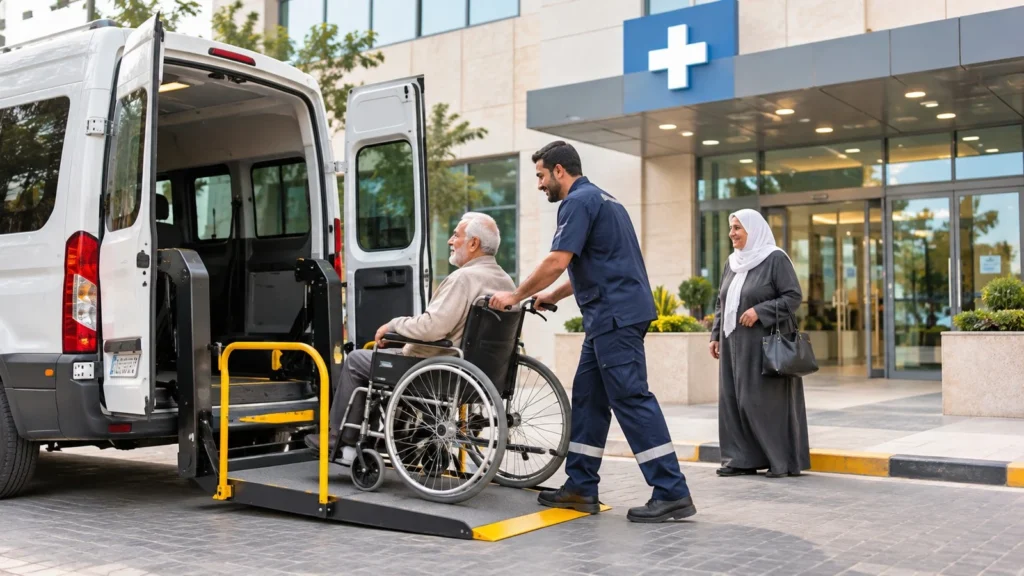
Transportation is an important part of daily life for elderly people and individuals with disabilities in Kuwait. Whether visiting a hospital, attending a rehabilitation session, going to work, or spending time with family, passengers need transportation that accommodates their mobility, accessibility, and personal assistance requirements.
However, not every transportation option is suitable for someone who uses a wheelchair, has difficulty walking, or requires additional support when entering and exiting a vehicle. Choosing an appropriate service involves considering vehicle accessibility, passenger comfort, boarding assistance, scheduling, and the nature of the journey.
The 8 types of transportation services available for elderly people and people with disabilities in Kuwait are listed below.
- Elderly transportation services
- Wheelchair-accessible transportation
- Special needs transportation services
- Dialysis transportation services
- Physical therapy and rehabilitation transportation
- Door-to-door assisted transportation
- Airport transportation for elderly people and passengers with disabilities
- Recurring transportation and monthly subscription services
1. Elderly Transportation Services
Elderly transportation services are designed for older adults who need comfortable and organized travel, particularly those who experience difficulty walking, maintaining balance, or boarding standard vehicles.
These services may include suitable passenger vehicles, assistance when entering and exiting, flexible pickup arrangements, and door-to-door transportation.
Elderly passengers commonly use these services for hospital visits, medical checkups, family gatherings, shopping trips, government appointments, and other everyday activities.
Some passengers require transportation only occasionally, while others benefit from regularly scheduled journeys. Families supporting older relatives can arrange elderly transportation services in Kuwait based on the passenger’s mobility requirements, travel frequency, and personal preferences.
2. Wheelchair-Accessible Transportation
Wheelchair-accessible transportation serves passengers who use manual or electric wheelchairs and need a vehicle suitable for their mobility equipment.
Unlike conventional passenger transportation, wheelchair transport requires careful consideration of vehicle access, wheelchair dimensions, the passenger’s ability to transfer, and appropriate securement arrangements.
Before arranging a journey, the transportation provider should understand whether the passenger intends to remain seated in the wheelchair or transfer to a vehicle seat.
The size and weight of the wheelchair, the boarding method, and any additional mobility equipment may affect which vehicle is suitable.
Wheelchair transportation can be particularly useful for hospital appointments, rehabilitation visits, family outings, and other journeys where conventional vehicle access would be difficult.
Passengers who require suitable vehicles and additional mobility assistance can explore special needs transportation services in Kuwait to understand available boarding arrangements, passenger support, and accessibility considerations before booking.
3. Special Needs Transportation Services
Special needs transportation is intended for people with disabilities, limited mobility, or additional assistance requirements during travel.
Passengers may have physical disabilities, mobility limitations, or individual needs that require more planning than a conventional taxi journey.
Depending on the passenger’s circumstances, transportation arrangements may involve suitable vehicles, assistance during boarding and exiting, additional time for transfers, and coordinated pickup and drop-off.
Respect for personal boundaries, privacy, and individual comfort is also important. Some passengers need minimal assistance, while others require more detailed arrangements before the journey.
Families and caregivers arranging transportation for passengers with disabilities can consider special needs transportation services in Kuwait when assessing vehicle suitability, passenger assistance, pickup arrangements, and individual mobility requirements.
4. Dialysis Transportation Services
Dialysis transportation helps patients travel between their homes and medical facilities for regularly scheduled dialysis appointments.
Because dialysis treatment often involves repeated visits, transportation planning is especially important. Patients and families may need consistent pickup arrangements, dependable scheduling, and suitable vehicles based on the passenger’s mobility needs.
Some passengers may feel tired after a treatment session or require additional time when entering and exiting the vehicle. Discussing these needs beforehand helps the transportation provider understand the journey requirements.
For patients attending several treatment sessions each week, arranging dialysis transportation services in Kuwait can help coordinate regular pickup times, return journeys, and mobility assistance according to their medical appointment schedules.
When arranging dialysis transportation, passengers should provide their appointment schedule, medical center location, pickup details, and any wheelchair or mobility assistance requirements.
Transportation services support travel to and from treatment facilities; they should not be confused with ambulance services or medical care during the journey.
5. Physical Therapy and Rehabilitation Transportation
Physical therapy transportation supports passengers attending physiotherapy sessions, rehabilitation appointments, or mobility-related treatment programs.
These journeys may be required after surgery, injury, or during ongoing rehabilitation. Depending on the individual’s condition, walking, climbing into a vehicle, or transferring between seats may be difficult.
Suitable transportation arrangements consider the passenger’s present mobility, the assistance needed during boarding, and the journey’s pickup and drop-off requirements.
Physical therapy appointments may occur several times a week. Regular scheduling can help passengers maintain a consistent travel routine without organizing a new journey for each session.
Families should communicate any mobility restrictions, walking aids, or additional assistance requirements before confirming transportation.
6. Door-to-Door Assisted Transportation
Door-to-door transportation involves arranging travel from an agreed pickup location to an agreed destination, with assistance based on the passenger’s needs and the provider’s available services.
For elderly people and passengers with disabilities, the journey between a building entrance and the vehicle can be just as important as the drive itself.
Stairs, narrow entrances, uneven surfaces, inaccessible pickup areas, and long walking distances can create difficulties for passengers with reduced mobility.
Providing details about the pickup and destination locations helps the transportation company assess the arrangements needed.
For example, a passenger using a wheelchair may require a suitable vehicle boarding area, while an older passenger using a walking frame may need additional time to reach the vehicle.
Families should confirm the exact assistance available, particularly when the journey involves stairs, difficult building access, or transfers between a wheelchair and a vehicle seat.
Door-to-door arrangements are useful for hospital visits, family gatherings, shopping, government offices, and other destinations.
7. Airport Transportation for Elderly and Disabled Passengers
Airport transportation supports elderly travelers and individuals with disabilities who require planned transfers to or from Kuwait International Airport.
Airport journeys often involve additional considerations, including luggage, passenger mobility, pickup timing, and access to suitable arrival or departure points.
For wheelchair users, the transportation provider needs information about the wheelchair, boarding requirements, and the number of accompanying passengers.
Older travelers may also benefit from having their journey organized in advance, particularly when family members are coordinating the trip.
Before booking airport transportation, confirm the flight details, pickup location, luggage requirements, passenger assistance needs, and the agreed airport drop-off or collection point.
Assistance inside the airport terminal is separate from the road transportation service and should be coordinated with the airline or airport assistance provider when necessary.
8. Recurring Transportation and Monthly Subscription Services
Recurring transportation is suitable for passengers who need journeys on a regular schedule rather than occasional one-time trips.
This arrangement can be useful for elderly people attending frequent appointments, wheelchair users traveling to work or education, and patients visiting medical facilities repeatedly.
Transportation providers may offer weekly or monthly arrangements based on the passenger’s travel frequency and destination.
For example, a passenger attending physical therapy twice a week may benefit from a fixed transportation schedule, while someone requiring frequent dialysis appointments may need regular pickup and return arrangements.
Monthly transportation plans can also support routine shopping, family visits, and other planned journeys.
Before agreeing to a recurring arrangement, families should discuss the frequency of trips, pickup times, return journeys, accessibility requirements, scheduling changes, and payment terms.
How to Choose the Right Transportation Service in Kuwait
Choosing the right transportation service for elderly people and individuals with disabilities in Kuwait requires evaluating vehicle accessibility, passenger assistance, scheduling reliability, personal comfort, pickup and drop-off arrangements, and transportation costs. These factors help families and caregivers identify services that accommodate individual mobility needs while supporting safe, comfortable, and organized journeys.
The six key factors to consider when choosing a suitable transportation service in Kuwait are outlined below.
- Check Vehicle Accessibility
Confirm whether the available vehicle can accommodate the passenger’s mobility requirements.
Wheelchair users should provide the type, dimensions, and relevant specifications of their wheelchair. They should also confirm whether suitable boarding and securement arrangements are available.
Not all wheelchair-accessible vehicles have the same equipment or capacity. - Understand the Assistance Available
Some passengers need assistance with boarding and exiting, while others require additional time or coordination with a family member or caregiver.
Discuss the level of assistance the transportation provider can offer before booking.
If a passenger requires clinical monitoring, medical equipment management, or emergency medical transportation, an appropriately equipped medical transport provider or ambulance may be necessary. - Consider Scheduling and Reliability
Medical appointments, rehabilitation sessions, and airport journeys often require careful timing.
Discuss pickup times, expected journey arrangements, and whether return transportation is included.
For recurring appointments, ask whether a regular schedule can be arranged. - Prioritize Passenger Comfort and Privacy
Transportation should account for the passenger’s comfort, personal preferences, and dignity.
An unhurried boarding process, respectful assistance, and clear communication can improve the travel experience for elderly people and individuals with disabilities. - Confirm Pickup and Drop-Off Access
Building entrances, stairs, parking restrictions, and wheelchair boarding areas may affect transportation arrangements.
Share relevant access information in advance so that the provider can assess whether the journey can be accommodated. - Understand Booking Costs
Transportation costs may depend on the journey distance, vehicle requirements, assistance needs, travel schedule, and whether the booking is one-way, return, or recurring.
Request a clear quotation and confirm what is included before finalizing the booking.
What Information Should You Provide Before Booking Transportation?
Providing accurate information helps transportation companies understand the passenger’s requirements and assess the most suitable available arrangements.
When making an inquiry, be prepared to share:
- Passenger mobility: Whether the passenger can walk independently, uses a walking aid, or requires a wheelchair.
- Wheelchair details: Whether it is manual or electric, its dimensions, and whether the passenger will remain seated in it.
- Pickup and destination: The exact locations, including any building access difficulties.
- Journey schedule: The preferred travel date, pickup time, and appointment time.
- Booking type: One-way, return, or regularly scheduled transportation.
- Passenger assistance: Any support required when boarding, exiting, or reaching the agreed pickup point.
- Accompanying passengers: The number of family members or caregivers traveling with the passenger.
Clear communication before booking helps reduce misunderstandings and makes it easier to coordinate the journey.
Can elderly people in Kuwait arrange recurring transportation for regular medical appointments?
Yes, elderly people in Kuwait can arrange recurring transportation for regular medical appointments, depending on the provider’s availability. Families coordinating frequent hospital visits can use elderly transportation for recurring appointments to organize pickup times, return journeys, and mobility assistance according to the passenger’s treatment schedule.
Do wheelchair users need to prepare specific information before booking transportation in Kuwait?
Yes, wheelchair users need to prepare specific information before booking transportation in Kuwait, including wheelchair dimensions, boarding requirements, and transfer needs. Passengers preparing for an accessible journey can follow a checklist for a wheelchair user’s journey to confirm the necessary vehicle arrangements, passenger assistance, and mobility equipment before departure.