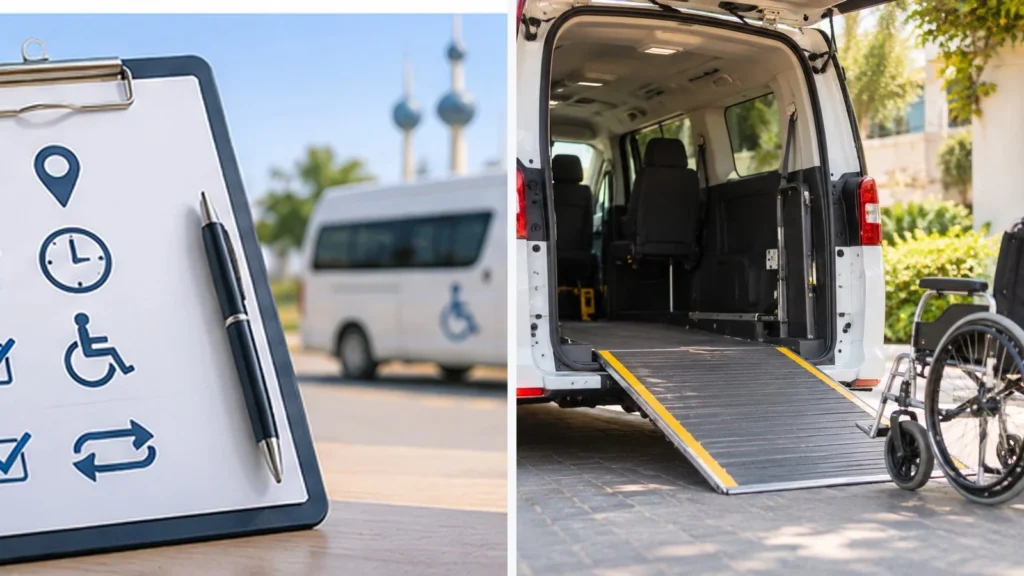
Preparing for a wheelchair user’s journey involves checking the wheelchair’s condition, confirming accessible transportation, organizing necessary belongings, and verifying pickup and destination arrangements. These preparations help wheelchair users and caregivers identify accessibility requirements before departure and reduce avoidable travel difficulties.
The nine essential checks include wheelchair condition, wheelchair specifications, vehicle compatibility, boarding assistance, personal belongings, pickup details, destination accessibility, return transportation, and final departure readiness.
The nine essential checks before a wheelchair user’s journey are explained below.
1. Check the wheelchair’s condition
Inspect the wheelchair before traveling to ensure its essential components are functioning properly. Check the brakes, tires, wheels, footrests, and other relevant parts for damage or loose fittings.
For powered wheelchairs, confirm that the battery is sufficiently charged and the controls are working. Any equipment problems that could affect safe movement should be addressed before departure.
2. Prepare wheelchair dimensions and specifications
Record the wheelchair’s width, length, height, and weight, including accessories that affect its overall size. The combined weight of the passenger and wheelchair may also be needed to confirm the capacity of boarding equipment.
These specifications help establish whether the wheelchair can fit through the vehicle entrance and into the designated wheelchair space.
3. Confirm wheelchair-accessible transportation arrangements
Check that the arranged vehicle can accommodate the passenger’s wheelchair and transportation requirements.
If the passenger will remain seated in the wheelchair, confirm that the vehicle has suitable boarding equipment, designated wheelchair space, compatible wheelchair securement, and appropriate occupant restraints.
4. Identify boarding and transfer assistance needs
Determine whether the passenger can board independently, needs physical assistance, or requires a wheelchair ramp or lift.
If the passenger plans to transfer into a vehicle seat, confirm that the transfer can be completed safely and that the wheelchair can be transported securely.
Communicate any assistance requirements before the vehicle arrives.
5. Prepare essential personal and mobility items
Organize the belongings the passenger needs during the journey, such as identification, appointment documents, communication devices, and necessary mobility accessories.
For powered wheelchair users, check whether a charger or other equipment is needed at the destination. Keep essential belongings accessible without obstructing wheelchair controls or securement points.
6. Verify pickup time and location
Confirm the scheduled pickup time, exact address, and agreed meeting point before departure.
Check whether the vehicle can access the building entrance and whether stairs, narrow pathways, or parking restrictions could affect wheelchair boarding. Share any relevant access instructions with the transportation provider.
7. Check destination accessibility
Verify that the destination has an accessible entrance and a suitable route from the vehicle drop-off point to the intended location.
Where necessary, confirm the availability of ramps, lifts, accessible pathways, and sufficient doorway clearance. This helps prevent accessibility problems after the passenger arrives.
8. Confirm return transportation arrangements
If the passenger needs a return journey, verify the expected pickup time, meeting location, and transportation contact details.
For medical appointments with uncertain finishing times, discuss how return pickup arrangements will be coordinated if the appointment ends earlier or later than expected.
9. Complete a final pre-departure check
Before leaving, confirm that the wheelchair is functioning, necessary belongings are ready, and the passenger has the required assistance.
Check the latest pickup details and ensure the passenger can reach the agreed boarding location. Any last-minute change affecting wheelchair access or assistance should be communicated to the transportation provider.
What should wheelchair users confirm with their transportation provider before departure?
Before departure, wheelchair users should confirm that their transportation provider has the correct wheelchair specifications, suitable vehicle accessibility arrangements, required boarding assistance, and agreed journey details. This helps ensure the passenger’s preparations match the transportation arrangements available on the travel date.
The five important details to confirm with the transportation provider are listed below.
- Wheelchair compatibility: Confirm that the vehicle can accommodate the wheelchair’s dimensions and occupied weight.
- Boarding equipment: Verify the availability of a suitable wheelchair ramp or lift and any necessary boarding assistance.
- Wheelchair securement and passenger restraints: Confirm that compatible equipment is available if the passenger will remain seated in the wheelchair during transportation.
- Pickup and destination arrangements: Recheck the agreed pickup time, meeting location, destination, and relevant accessibility instructions.
- Return transportation: Confirm the return pickup arrangements when the journey includes transportation back from the destination.
Do wheelchair users need to confirm vehicle accessibility before their journey?
Yes, wheelchair users need to confirm vehicle accessibility before their journey to ensure the boarding equipment, interior wheelchair space, and securement arrangements meet their requirements. Passengers assessing the suitability of an accessible vehicle can review the features and equipment of wheelchair-accessible transport vehicles to understand how ramps, lifts, wheelchair spaces, and restraint systems support transportation.
Can wheelchair users arrange transportation in Kuwait before completing their journey checklist?
Yes, wheelchair users can arrange transportation in Kuwait before completing their entire journey checklist, provided they share the essential mobility information needed to assess vehicle suitability. Passengers planning wheelchair-accessible travel with Alsoor Elderly Transport can learn how to book a wheelchair transport vehicle in Kuwait to understand the booking steps, required passenger details, and transportation confirmation process.
Do wheelchair users need to confirm return transportation before attending a medical appointment?
Yes, wheelchair users who require a return journey should confirm their transportation arrangements before attending a medical appointment. Passengers and caregivers coordinating departure and return travel can learn how to arrange a round trip for elderly passengers to understand pickup scheduling, appointment duration, and return transportation requirements.